Thursday, June 4, 2015

Bins that treat your canine pets to a meal

Soon you could treat your canine pets to a meal by just getting rid of your plastic bottles and cans. Delhi parks will have solar-powered recycling bins which would offer dog food and water to its users. The Capital will be the first city to have this innovative facility.
The concept -- implemented in the U.S., Russia, Turkey, and so on – is an incentive to people who dispose of non-biodegradable wastes like plastic bottles and cans inside bins. The bins will be installed by the New Delhi Municipal Council (NDMC) in association with Pugedon Asia, the company that designed it.
In the first phase, 20 bins will be installed at 5 places -- Lodhi Garden, Satya Marg (Chanakyapuri), Golf Link, Talkatora Garden and Nehru Park.
“This is a free model which means these bins do not require electricity and are totally unmanned. A person has to insert a plastic bottle, juice or cold drink can and s/he would get dog food in return. During morning and evening hours, a lot of people come with their pets to NDMC gardens. Locations have been identified based on the residents living around it,” said Nikhil Kumar, Secretary, NDMC. The facility would be launched by July-end.
The machine can take 800 units of plastic bottles and cans. It is fitted with sensors and led lights which would display when the bin is full.
“There are three bins inside the machine – one for plastic waste, another 20-litre water tank and the third is the food bin. The sensors automatically drop kibbles and water when anyone throws the waste inside. The NDMC is giving us the space and we are installing these facilities for free,” explained Madhuresh Singh and Sangdrema Khrimey, founders of Pugedon Asia. The bottles are then sold to recycling companies, they added.

Monday, April 20, 2015

World’s Water Future Demands Action Today

DAEGU, South Korea, April 14, 2015 (ENS) – In 2050 there will be enough water to produce food for a global population of nine billion, but over-consumption and climate change will increase water scarcity in the planet’s neediest regions, finds a new report from the UN Food and Agriculture Organization and the World Water Council.
The report, “Towards a water and food secure future” was released Tuesday at the Seventh World Water Forum now underway at the Daegu EXCO. Held every three years since 1997, this year’s forum is jointly organized by the World Water Council, the Republic of Korea, the city of Daegu and the province of Gyeongbuk.
“Food and water security are inextricably linked. We believe that by developing local approaches and making the right investments, world leaders can ensure that there will sufficient water volume, quality and access to meet food security in 2050 and beyond,” said World Water Council President Benedito Braga.
river
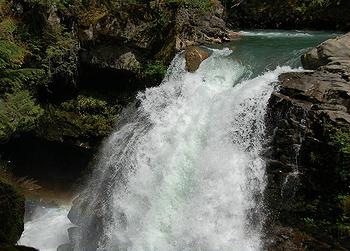
The Nooksack River in Washington State, USA (Photo by Rose Braverman)
Meanwhile, another UN agency reports the planet will face a 40 percent shortfall in water supply in 2030 unless the international community “dramatically” improves water supply management.
The 2015 World Water Development report, released by UNESCO for World Water Day, March 22, predicts that demand for water will increase 55 percent by 2050 while 20 percent of global groundwater is already overexploited.
The FAO predicts that by 2050 some 60 percent more food will be needed to feed the world, placing added stress on water supplies. Agriculture is already the most water-intensive industry, accounting for at least two-thirds of the water drawn from rivers, lakes and aquifers in many countries.
“Water, as an irreplaceable element of achieving this end, is already under pressure by increasing demands from other uses, exacerbated by weak governance, inadequate capacities, and underinvestment,” said Maria Helena Semedo, FAO deputy director-general for natural resources.
“In an era of accelerated changes unparalleled to any in our past, our ability to provide adequate, safe and nutritious food sustainably and equitably is more relevant than ever,” said Semedo.
Water supply improvements are possible, says the FAO, calling for governments to allocate water rights “in fair and inclusive ways” and to help farmers increase food output even with limited water resources by empowering them to better manage water scarcity risks.
farmer
Organic vegetable farmer in Boung Phao village, Laos waters her crop. (Photo by Asian Development Bank)
The world’s attention to water comes as UN Member States prepare to roll out a post-2015 sustainable development agenda that includes water governance and quality, wastewater management and the prevention of natural disasters.
The current UN development agenda is governed by the Millennium Development Goals, MDGs, established following the UN’s Millennium Summit in 2000 and extending through 2015. The eight goals include one on environmental sustainability.
The UN is now formulating post-2015 goals that place sustainability at the core of its development activities.
“We have to integrate the social, economic and environmental dimensions of sustainability. We must act now to slow the alarming pace of climate change and environmental degradation, which pose unprecedented threats to humanity,” declared the UN’s High Level Panel on the Post-2015 Development Agenda.
“This is an opportune time to re-visit our public policies, investment frameworks, governance structures and institutions,” Semedo said Tuesday. “We are entering the post-2015 development era and we should mark it with solid commitments.”
The international community must gear up for a new era of “hydro-diplomacy” as the threat of water scarcity risks plunging the world into a period of geopolitical tension and stunted development, UN Deputy Secretary-General Jan Eliasson told the UN General Assembly March 30.
“Water is one of the highest priorities for development and lives in dignity, as well as a serious factor in maintaining peace and security,” said Eliasson opening the High-Level Interactive Dialogue on the International Decade for Action Water for Life, 2005-2015.
“The lack of water causes individual tragedies,” he said. “And it also, growingly, constitutes a threat to international peace and security. There is a need for ‘hydro-diplomacy’ – making scarce water a reason for cooperation, rather than a reason for conflict.”
Eliasson warned that in a period of “intensifying disasters, both man-made and natural,” social and economic stresses related to water supply would increasingly flare up, spawning tensions between communities and nations.
“Shared water sources have historically brought countries closer together,” Eliasson said. “Instead of seeing water-sharing as a problem, we have to treat it as a potential solution, with the help of innovative and dynamic hydro-diplomacy.”
children
Children in South Sudan enjoy a drink of water. (Photo by Steve Evans)
Every day nearly 1,000 children die from diarrhea linked to unsafe drinking water, poor sanitation, or poor hygiene. In three countries – the Democratic Republic of the Congo, Mozambique and Papua New Guinea – more than half the population does not have improved drinking water.
“The impact of water on human health as well as economic well-being is better understood than a decade ago, including water’s critical importance for households, industries, agriculture, cities, energy production and transportation,” said President of the UN General Assembly Sam Kutesa in a message to the meeting.
Kutesa recognized progress made under the Millennium Development Goals, yet, he said, 800 million people continue to live without access to an improved water source while many more are without a safe and sustainable water supply.
“This year represents a pivotal opportunity for the international community,” he said. “We are in the midst of an historic opportunity to change our world by improving livelihoods everywhere and protecting our planet.”
Léo Heller, UN Special Rapporteur on the human right to water and sanitation, said, “What is needed is a better application of resources – by identifying and targeting those who still do not have access; by practicing effective mechanisms for affordability; by integrating the principle of equality and non-discrimination in policies and programs and by putting in place the necessary physical and regulatory frameworks to monitor who are benefitting from interventions and who are being left behind.”
Heller said, “No one should be left without access to water and sanitation under the new post-2015 development framework.”

Thursday, April 2, 2015

Ten-year review finds 87% of disasters climate-related (UNISDR - United Nations Office for Disaster Reduction)


Data shows that more than 150 million people were affected by floods in 2010 alone.
06 March 2015, GENEVA - A week before world leaders and representatives of civil society gather in Sendai, Japan, for the Third UN World Conference on Disaster Risk Reduction, the UN Office for Disaster Risk Reduction said today that climate-related disasters now dominate disaster risk management.

Margareta Wahlström, head of the UN Office for Disaster Risk Reduction, said: "We now have ten years of experience in implementing the Hyogo Framework for Action which has guided global efforts to reduce disaster risk since the 2004 Indian Ocean Tsunami.

"Despite many successes and greatly improved performance in disaster management, it is sobering to note that 700,000 people have died in disaster events over the last ten years. A total of 1.7 billion people have had their lives disrupted in some way. It is of great concern that economic losses in major reported disaster events come to $1.4 trillion."

Ms. Wahlström said that while 70% of deaths are caused by earthquakes, climate-related disasters now account for over 80% of all disaster events and contribute enormously to economic losses and short and long-term population displacement triggered by disaster events. 155 million people have suffered short or long-term displacement since 2008.

She said: "It is very important that the World Conference on Disaster Risk Reduction which opens on March 14, should provide clear, action-oriented guidance to governments, local governments, the private sector and civil society in general on how best to tackle the underlying drivers of risk such as poverty, climate change, poorly planned urban growth, land use and the decline of protective eco-systems."

The World Conference is due to adopt a major revision of the Hyogo Framework for Action which will guide disaster risk management efforts for the next ten to 15 years depending on the time frame adopted by the Conference.

The agreement on disaster risk reduction is one of three mutually supportive processes which will be decided this year as part of the overall Post-2015 development agenda. Major frameworks are also to be agreed on sustainable development goals (September) and climate change (December). - See more at: http://www.noodls.com/view/7BEDD94EA289EFED608952A08281B3253F77A242?1588xxx1425662135#sthash.oaU0D3l1.dpuf

Wednesday, March 25, 2015

India's fast-growing cities face polluted water crisis

NEW DELHI -- Ranbir Singh still remembers when the wells in his village on New Delhi's southwestern edge were filled with sweet-tasting water and livestock drank from the small ponds that dotted the area.
Now the village has been all but subsumed by Dwarka, a high-rise satellite city that sprang up in the 1990s on the edge of India's sprawling capital.
The ponds dried out long ago and are now filled with rubbish, while over-extraction has caused the groundwater level to fall so far that industrial pumps are needed to bring water to the surface.
“Today what you get from underground is not even drinkable,” the 62-year-old told AFP in Pochanpur, now a hodgepodge of small-scale construction overshadowed by Dwarka's tower blocks.
“People who still consume it complain of stomach problems, and many young people in our village suffer from skin problems because of this water.”
Decades of population growth and uncontrolled urbanization have created a water crisis in India.
The World Resources Institute, a Washington-based research group, says the national supply is predicted to fall to 50 percent below demand by 2030.
A new U.N. report to be launched in Delhi on Friday ahead of World Water Day on March 22 will warn of an urgent need to manage the world's water more sustainably and highlight the problem of groundwater over-extraction, particularly in India and China.
It says 20 percent of global groundwater sources are already over-exploited and warns the problem will only become more acute without better management, with demand expected to rise by 55 percent by 2050.
Contaminated Rivers
Sushmita Sengupta of the Delhi-based Center for Science and Environment says much more could be done to manage supplies in India.
“Our lakes and ponds were once a natural way of recharging groundwater, but they are being destroyed through urbanization,” she said.
“Our sewage goes untreated, so the rivers are contaminated. We used to be very good at managing water in India, but we are losing that ability.”
Activist Diwan Singh is campaigning for the city to divert rainwater drains, which currently flow into the sewage system, to lakes and ponds in order to replenish the water table.
 The 44-year-old experienced Delhi's water woes first hand when he moved into a tower block in Dwarka, which like many parts of the capital receives no piped water and has to rely on tanker deliveries and borewells.
“Delhi's groundwater management has been dismal,” complained Singh, who says he faces an uphill struggle against a slow-moving and sometimes corrupt bureaucracy.
“In some areas around Dwarka, the groundwater level has fallen by 60 meters. Meanwhile all the water that falls in the monsoon is being drained into the sewers and lost.”
The result is that in many parts of Delhi the groundwater contains such a high concentration of impurities that it is undrinkable.
'People get very angry'
A few kilometers away from Dwarka's modern high-rises in the working-class suburb of Kailash Puri, life revolves around the city water board's twice-weekly deliveries.
Residents used to drink water drawn from the ground with borewells, but that is now too toxic, and few can afford the expensive water purifiers that are a standard feature of Delhi's wealthier households.
As the water board's brightly colored trucks roll down the street, entire families including small children dash out of their homes with plastic containers to fill.
“I was supposed to be at a job interview today, but I had to miss it because the water was coming,” said 22-year-old Neha Rana as she filled her buckets.
“It doesn't matter what's going on, you have to come and get the water. At times people get very angry, and fights can break out.”
No one at the Delhi water board would speak to AFP on the record, but an official speaking on condition of anonymity said this was a national crisis and could not be resolved at the state level.
“It is an issue that needs concerted, long-term planning at the national level,” he said.
The issue has become so big in Delhi that providing free water was one of new Chief Minister Arvind Kejriwal's key campaign promises in state elections last month.
In the meantime, private water “mafias” are catering for demand unmet by the government — at a price.
Many source their water from illegal borewells, exacerbating the problem, and there have been reports they collude with water board officials to create an artificial shortage.
“They can recharge their pockets but they can't recharge the groundwater,” said Singh, the Dwarka campaigner, as he looked despondently at the empty pond in the park near his home.

Wednesday, December 3, 2014

T SHIRTS CAN BE MADE FROM PET BOTTLES


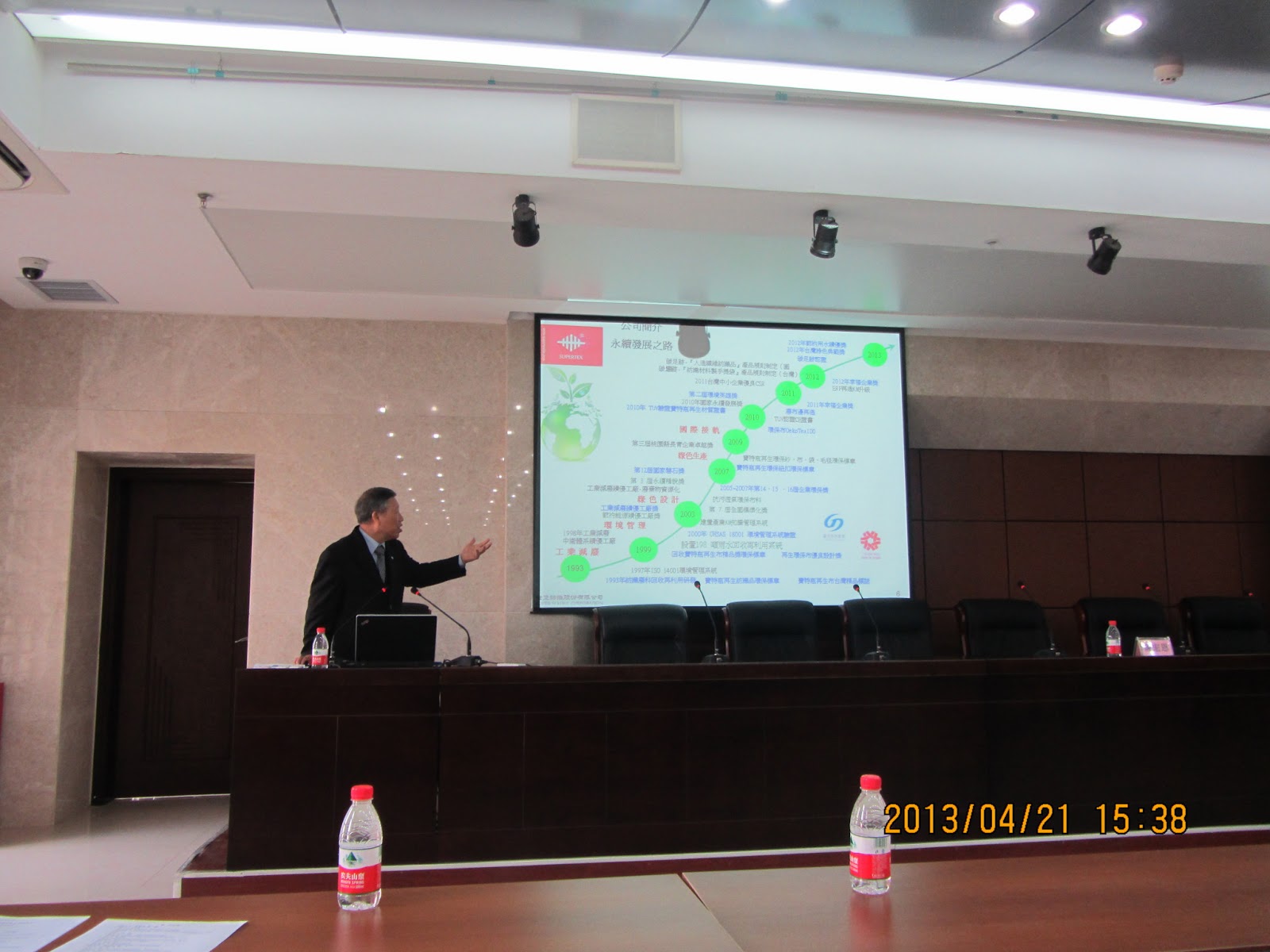
Seminar was organized by APO COEGP CPC TAIWAN and BISMAN FINTECH P LTD on Green Technologies in the field of Waste recycling. Presentations were given in the area of Recycling of waste using Green technologies. Mr. Alex Yu Lo of Super textile corporation informed that their company makes T shirts and Uniforms from the fabric manufactured recycling PET waste which are being used by sportsman. Many world cup football teams have used this fabrics in their uniform. Prof. Ma explained the audience that you can recover precious metals worth US$20000 from the recycling of cell phone waste of 1 MT worth US$5000 using innovative technologies developed by Taiwan. Senior officers of Gujarat Pollution control Board were also present in this seminar.

Monday, October 27, 2014

Alpine Lifelines on the Brink

from WWF

Gland, Switzerland - Only one in ten Alpine rivers are healthy enough to maintain water supply and to cope with climate impacts according to a report by WWF. The publication is the first-ever comprehensive study on the condition of Alpine rivers.

The landmark WWF study, Save the Alpine Rivers, found that only 340 kilometers of large Alpine water systems remain ecologically intact compared to 2,300 kilometers of heavily modified or artificial stretches of river.

“Healthy rivers, streams, wetlands and floodplains provide a suite of ecosystem services including fresh water and flood protection,” said Christoph Litschauer, Head of WWF’s European Alpine Freshwater Program. “These systems are essential for human livelihood. Beyond basic services, we also have to look at healthy natural rivers as one of our best insurance policies against climate change.”

The high mountain ranges of the Alps function as water towers for 14 million people from eight countries. The rivers that drain these mountains provide household and agricultural water, food, fisheries, energy, jobs and recreation.

The study, carried out with Vienna’s University of Natural Resources and Life Sciences, assesses the current status of 57,000 kilometers of river and found 89 out of 100 Alpine rivers are already substantially harmed. Only 11 per cent of rivers are in pristine condition, with the rest having been redirected, altered or impacted by hydro-electric dams.

“Many planned hydro-dams are situated in protected areas like the Soca in Slovenia or on pristine rivers like the Isel in Austria. These counteract current protection efforts,” continued Litschauer. “Rivers are more than mere energy suppliers; they need to be seen for the complete natural services they provide.”

In addition to damming and regulation of rivers, Alpine riverbanks are being converted to agricultural land and urban areas, reducing their natural ability to regulate floods.

Climate change was also identified as a threat to Alpine rivers in the report. This adds to the results of a separate study conducted for the Austrian government that found that temperature increase in the Alps is much higher than in other regions of the world. The temperature in the Alps has risen by 2°C within the last 200 years, far above the average global temperature increase of .85°C.

Following the costly and catastrophic floods that hit Europe in the past few years, WWF highlights the need to strengthen the resilience of water ecosystems and is calling on governments to prepare an action plan to protect and restore these rivers.

“Extreme weather events are increasingly likely and we must protect and strengthen the capacity of our ‘green infrastructure’ including living rivers and wetlands. The environment is changing and we must respond,” said Litschauer.

Despite being one of the most densely populated mountain ecosystems in the world, the Alps contain a variety of unspoiled wild places and are important for biodiversity. The WWF study defines no-go areas for hydro power plants and highlights river stretches for future restoration projects.

Monday, September 15, 2014

The stort of bottled water

Do you still buy or drink bottled water? If the answer is Yes, you should think about it and check this video out!


Thursday, September 4, 2014

powered by salt water

One of the wildest cars at the Geneva Motor Show, the Nanoflowcell Quant e-Sportlimousine is a research prototype that's powered by salt water. More accurately, it's powered by a flow battery that uses a special formula of ionic charge-carrying salt water as its storage medium. Not content to just electrify an average powertrain, Nanoflowcell uses its technology to send 912 horses into an all-out frenzy of spinning, smoking rubber.

We now have a clearer picture of Nunzio La Vecchia's energy and supercar ventures than we did when we covered the Quant teaser. La Vecchia began researching alternative energy technologies in 1991, forming NLV Solar in Switzerland seven years later. He turned his attention to auto design in 2003, partnering with Koenigsegg on the original Quant in 2009 and releasing an updated version on his own a year later. Nanoflowcell emphasizes that the cooperation with Koenigsegg ended in 2009, and the 2014 Quant represents an entirely new vehicle concept.
"Following the 2010 Geneva Motor Show, it was decided to pursue a completely new concept, both optically and technically," Nanoflowcell explains. "Every element of the Quant e-Sportlimousine has been developed from the ground up over the last four years: new powertrain, complete redesign, and most importantly, every aspect of the new prototypes are designed with homologation requirements in mind."
The beating heart of the new Quant is its Nanoflowcell power storage, a very specific formulation of flow battery. Flow battery power for vehicle use is being researched elsewhere, as well, but the Quant becomes what Nanoflowcell qualifies as the first actual vehicle powered by it.
Nanoflowcell explains that its technology boasts five to six times the storage capacity of other flow cell designs or lithium-ion batteries, making it primed for vehicular use. It credits that superior energy density to "an extremely high concentration of ionic charge carriers in the cell system’s electrolyte" and translates it into a 249- to 373-mile (400- to 600-km) driving range estimate.
Understandably, Nanoflowcell isn't divulging the full recipe for its flow battery or electrolytes. In its introductory video, it describes the solutions simply as salt water. La Vecchia confirmed that the full truth is a bit more complex, as the electrolytes contain a mix of metal salts and other ingredients.
The high- and low-charge solutions are stored in separate 200-liter tanks in the rear of the Quant, being pumped forward through a central cell, separated from each other by a thin membrane. This creates electricity, which flows into two supercapacitors, where it is stored and managed, released on acceleration to power the four three-phase wheel motors. Nanoflowcell says the flow technology operates with 80 percent internal efficiency.

The Quant design uses supercapacitors for their ability to release energy quickly, allowing for the sportiest performance, a reason that they've shown up in race cars and concepts like the Toyota Yaris Hybrid R. On the receiving end of that energy, the four motors combine for a very supercar-like 912 hp.
Beyond the robust estimated range, the Nanoflowcell system has other major advantages. When the energy in the electrolyte solutions is used up, the liquids need only be replaced, a process that is similar in ease and quickness to refueling a gasoline car. La Vecchia envisions a future where gas stations or the like will offer seamless flow cell refueling. Nanoflowcell also says that the used liquid can be recharged and used again.
Unlike in lithium-ion batteries, the flow battery's storage capacity does not degrade over time from memory effect. Nanoflowcell claims there are no environmentally damaging components to the electrolytes and says the system does not rely on rare or precious metals.
As with any research vehicle, the Quant's specifications need to be viewed as food for thought, not reliable, rock-solid numbers. Nanoflowcell lists a 2.8-second 0-62 mph (100 km/h) time and a potential 236 mph (380 km/h) top speed. Those numbers come thanks in part to the gobs of torque being cranked at each wheel. The car weighs 5,070 lb (2,300 kg).
In terms of design, La Vecchia and company did an excellent job in making a car that stands out at a show full of wild and exotic designs, without making it so overwrought as to distract from the technological story. You could walk right past many alternatively powered vehicles, never realizing what interesting technology hides underneath plain skins, but you're going to want to stick around and learn more about a car like the Quant.

The 5,257-mm concept offers seating for four with gullwing access to the front and rear. The big, roof-hinged doors are reminiscent of the wings on last year's Vauxhall Monza concept.
At the front, the Quant has an interesting combination of arched fenders swooping inward and a distinctive grill and inlet design. A clamshell roof drops gently toward the rear, framing the extended four-person cabin. The rear quarter is defined by the curves of the fenders and double-bubble roof as well as the under-shell-style fascia. The "crystal lake blue" and copper paint job represents the car's liquid-based electrical powertrain.
"It was important to us that, despite its size and unusual dimensions, our four-seater Quant e-Sportlimousine would be a sporty automobile," explains La Vecchia. "The front of the car is convincing, with its pronounced shoulders, self-confident look, and clear lines. Anyone who stands in front of the QUANT e-Sportlimousine will know exactly what I mean."


 Source: Nanoflowcell

Sunday, March 30, 2014

Lights off for Earth Hour's global crowdfunding call

Lights went off in thousands of cities and towns across the world on Saturday for the annual Earth Hour campaign, which is aiming to raise money via the Internet for local environmental projects.
The Singapore-based campaign by conservation group WWF was boosted by Hollywood star power, with "The Amazing Spider-Man 2" stars Andrew Garfield, Emma Stone and Jamie Foxx leading ceremonies at the city-state's Marina Bay district.
Comic-book hero Spider-Man is this year's "ambassador" for Earth Hour in which 150 countries are taking part, according to organisers. The event was launched in Sydney in 2007.
The Australian city's Opera House and Harbour Bridge were among the first landmarks around the world to dim their lights for 60 minutes during Saturday's event.
An estimated 7,000 cities and towns from New Zealand to New York are taking part at 8.30 pm local time.
Hong Kong's stunning waterfront skyline was unrecognisable on Saturday evening, with the city's tallest skyscraper, the International Commerce Centre, stripped of the vast light show usually wrapped around its 118 storeys.
Blazing neon signs advertising some of the world's largest brands were shut off, leaving the view of the heavily vertical southern Chinese city peppered only with tiny lights from buildings' interiors.
In the Indian capital of New Delhi, lights were turned off at major landmarks, including the India Gate.
Earth Hour partnered with payments giant PayPal to allow donors to contribute to specific projects from Russia and India to Canada and Indonesia, using Asian fundraising site Crowdonomic.
Earth Hour chief executive Andy Ridley said before the lights went off in Singapore that the event had moved beyond symbolism to concrete action.
"If you want to get real social change you need to have symbolism," he told AFP.
"We are seeing some really big outcomes."
But it has drawn criticism, including from Danish political scientist Bjorn Lomborg who argues it does little for the real problem of global warming and diverts resources from other problems.
"This celebration of darkness sends the wrong message, Lomborg said in a statement this week.
"While more than a billion people across the globe make a symbol of foregoing non-essential electrical power for one hour a year, another 1.3 billion people across the developing world will continue to live without electricity as they do every other night of the year."
Projects under the "Earth Hour Blue" crowdfunding scheme -- which aim to raise more than $650,000 in total -- include a turtle centre in Italy and funding for forest rangers in Indonesia.
Other projects include a 24,000-dollar effort in the Philippines to bring fibreglass boat technology to coastal communities affected by Super Typhoon Haiyan in November last year.
In Nepal, $100,000 is being sought for a programme called "A Flame Called Hope" to provide access to biogas energy for 150 households in the Terai region, reducing the need for wood as fuel and helping protect the habitat of endangered wildlife, according to the Earth Hour website.
"Spider-Man 2" star Garfield told journalists that he was a personal supporter of the Nepal project.
"What they are doing is turning waste into energy, it's like the cycle of life right there, if only everyone knew how simple it was," he said.
Earth Hour will see other landmarks including the Empire State Building in New York, the Eiffel Tower in Paris and the Kremlin in Moscow switch off their lights for an hour.
burs/pdh

From AFP

Tuesday, February 25, 2014

World Water Day 2014: Water and Energy

Water and energy are closely interlinked and interdependent. Energy generation and transmission requires utilization of water resources, particularly for hydroelectric, nuclear, and thermal energy sources. Conversely, about 8% of the global energy generation is used for pumping, treating and transporting water to various consumers. 
In 2014, the UN System – working closely with its Member States and other relevant stakeholders – is collectively bringing its attention to the water-energy nexus, particularly addressing inequities, especially for the 'bottom billion' who live in slums and impoverished rural areas and survive without access to safe drinking water, adequate sanitation, sufficient food and energy services. It also aims to facilitate the development of policies and crosscutting frameworks that bridge ministries and sectors, leading the way to energy security and sustainable water use in a green economy. Particular attention will be paid to identifying best practices that can make a water- and energy-efficient 'Green Industry' a reality.
Selling fuel wood at wood market in Cambodia ©FAO/J. Koelen
Geothermal Power Station in Þingvellir, Iceland - Flickr CC BY-NC-ND 2.0 by Scott Ableman
  • Raise awareness of the inter-linkages between water and energy
  • Contribute to a policy dialogue that focuses on the broad range of issues related to the nexus of water and energy
  • Demonstrate, through case studies, to decision makers in the energy sector and the water domain that integrated approaches and solutions to water-energy issues can achieve greater economic and social impacts
  • Identify policy formulation and capacity development issues in which the UN system, in particular UN-Water and UN-Energy, can offer significant contributions
  • Identify key stakeholders in the water-energy nexus and actively engaging them in further developing the water-energy linkages
  • Contribute as relevant to the post-2015 discussions in relation to the water-energy nexus.

Thursday, November 14, 2013

ARM System in Kaohsiung

Taking MRT in Kaohsiung also do recycling. EPA Kaohsiung designed the first "automatic resource recycling machines" in Taiwan. The public can insert empty PET bottles, aluminum, iron cans into the machine in the MRT station and the refund will refill in the travel card automatically.  The city mayor Chen Chu demostrated the recycle process in person and said the refund will only refill in the travel card, that means we encourage the publics taking the MRT ar rent the bike. The ARM system can improve the convenience and efficiency of recycling, and it is the symbol of the progress for the city.


Wednesday, May 15, 2013

Green trails around Taiwan


Imaging, a beautiful trail around the island is only for walk and bike.
Imaging, a mountain trail without Mercury lamp, herbicides and cement barrier.


The project began in April 23, 2006. It is a civic action, which is committed to protecting Taiwan mountain and ocean scenery, especially the local humanities. Hand-made trails are different from those using the equipment. The volunteers built the trails by local materials and simple tools to combine the local environment and historians. Since 2007 leading in the Appalachian Trail volunteers’ concept, we combine the official and non-governmental forces to organize the trails working holiday, to establish the trail base and even the combination of community-based Eco-tourism.


Completion of the thousands of miles of trails around the island road network series, we further proposed the idea of "One Village One forest path, the period of" Community” and finally reach the environmental rehabilitation and ecological the goal of restoration.


Tuesday, May 7, 2013

Sharing in Henan, China


The concept of city mine which we dedicated to promote in Taiwan. What is that mean? It means the waste, ex PET bottle, scrap metal, glasses, etc, which we can recycle and reuse instead of mining new resources. 


For Supertex, we believe that, the PET bottle is the petroleum on the ground. We also believe that, if the more people participate in recycling waste, the more possibility we can leave a clean planet for our children. So, we are glad to share our ideas and experience, and it is also our mission.

Monday, April 1, 2013

The green path of happiness


How would you deal with the waste of redecorating, especially stones and the cement blocks?
In the end of 2012, we have redecorated our staff restaurant and tear down an old fish pool to build up a new studio. Of course, we got a lot of stones and cement blocks. Our colleague proposed an idea to decorate our green garden by these waste. 


They sorted out a path in our garden during their leisure time, collected stones and pave them on the path.


Then, we have made some planting along the path on the new beginning after the Chinese New Year. By the way, we had some unexpected decoration. It’ s so beautiful, isn’t it?


Tuesday, March 5, 2013

Taiwan tests recycling's limits with bus stops out of bottles

from BBC News


Thursday, December 27, 2012

Water-saving Award


Water Resources Agency of the Ministry of Economic Affairs on December 19th obtain a water-saving Award in recognition of excellent water-saving enterprise, units and individuals, including Super Textile and other 21 companies of the year. In his speech, Vice President Wu Den-yih said that in recent years by the impact of global climate change, Taiwan plagued by drought and flood frequency is increasing, not only government departments premade contingency measures, and all the people should be fit to exercise water conservation.
Economic Minister Du Zi-jun specified that the 21winning corporate units in this year are quite outstanding performance in the water conservation, and the total annual water-saving capacity of 2,011 tons.

Thursday, December 20, 2012

2012.12.12 carbon footprint demonstration


December 12th, EPD invited six vendors who participated in the carbon footprint demonstration case and obtained exploration label then gel containing food, clothing, housing, transportation and other aspects of the product's carbon footprint
For the corporate social responsibility, Manufacturers to formulate a vision of product carbon footprint reducing targets, including the upgrading of the raw materials extraction rate, waste recycling, and research new technology to lower the heat of the earth.
The Eco shopping bag of Super Textile is made from 100% recycled PET bottles, which could reduced the carbon emissions 5KG effectively.
More information: http://cfp.epa.gov.tw

Wednesday, December 5, 2012

2012 public welfare for children


Super Textile has dedicated to public welfare and social responsibility for a  long time. We produce Eco-friendly products, greening our factory, and share our experience of environment protection to the public.

We know that the children are our hope, however some children need some help to solve their problems of living necessary. We collaborated with different companies, ex AUO, 3M, Unimicron etc. and sponsored 5000 welfare lunch boxes. By selling these lunch boxes, the revenue will go to Child Welfare League Foundation.

Wednesday, October 17, 2012

2012 Taiwan Green Classics Award

In 2011, we have received the Taiwan Green Classics Award for RPET (recycled PET bottle fabrics) products, but we provided not only fabrics for years. We can do something more, from material to finished products. We provide a total service chain for example, design, manufacture, transport etc  to our customers, and help them to decrease the cost, energy or travel expenses. It is a total solution service, and this is the reason why we have the Taiwan Green Classics awards again.

Thursday, September 13, 2012

2012 the Best Company Award

It is great honer, that we have received the 2012 Best Company Award again, which was held by Department of Labor, Taipei City.  We believe that, our staff is the biggest  assets and we keep trying to improve our welfare. Supertex concerns our planet and our staff, too.